

The whine of an overloaded motor straining against a mechanical brake. The jarring clunk and shower of sparks as metal teeth engage under stress. The constant, costly cycle of inspections, adjustments, and replacements. For decades, controlling motion, especially bringing powerful rotating systems to a precise, safe stop – or holding them firmly in position – was often a noisy, maintenance-heavy, and sometimes imprecise affair. We accepted it as the necessary price of industrial power. But what if there was a better way? A way to harness motion with near-silent authority, incredible precision, and remarkable longevity? Enter the unsung heroes of modern motion control: **Hysteresis Brakes**.
Forget everything you think you know about traditional friction brakes. Hysteresis brakes operate on an entirely different principle, harnessing the invisible power of magnetism to deliver unparalleled performance. They are the silent partners in countless high-tech applications, from the smooth descent of a stage curtain at a Broadway show 🎭 to the precise tension control in multi-million-dollar printing presses 📰, and even the sensitive force feedback in cutting-edge surgical robots 🏥. It’s time to shed light on this remarkable technology and understand why it’s revolutionizing industries where control, reliability, and quiet operation are paramount.
**The Heart of the Matter: It’s All About the Loop (The Hysteresis Loop, That Is!)**
To truly appreciate the elegance of a hysteresis brake, we need a quick dip into the fascinating world of magnetics, explained simply. Imagine a piece of magnetic material, like the rotor core inside the brake. When you expose it to a magnetic field (generated by the brake's stator electromagnets), its internal magnetic domains align with the field. But here's the key: when you *remove* the external magnetic field, these domains don't instantly snap back to their original, random state. They lag behind, resisting the change. This inherent \"memory\" or resistance to demagnetization is **hysteresis**.
In a hysteresis brake, this lagging effect translates directly into braking torque. Here’s how it works:
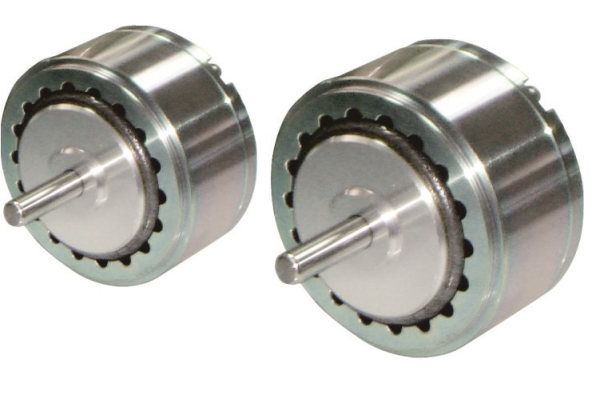
1. **The Stator:** This stationary part houses wire coils. When electrical current flows through these coils, it generates a powerful, controlled magnetic field. No physical contact occurs here.
2. **The Rotor:** This rotating part is typically made from a special alloy with high magnetic hysteresis properties. It’s attached directly to the shaft you need to control.
3. **The Magic of Non-Contact:** As the rotor spins within the magnetic field generated by the stator, the constantly changing magnetic flux induces eddy currents *within* the rotor material itself. Crucially, it’s the interaction between this magnetic field and the rotor material's inherent hysteresis properties (its resistance to magnetization and demagnetization cycles) that generates the braking force.
4. **Controlled Drag:** The hysteresis effect causes the rotor material to constantly \"lag\" magnetically behind the applied field. This magnetic drag manifests as a smooth, continuous braking torque applied directly to the rotor shaft. The key? This torque generation happens *without any physical contact* between the stator and rotor.
5. **Precision Power:** The magnitude of the braking torque is directly proportional to the strength of the magnetic field, which is controlled precisely by the amount of electrical current supplied to the stator coils. More current equals stronger field equals higher braking torque. Less current means less torque. It’s beautifully linear and controllable.
**Why Hysteresis Brakes? Unlocking a World of Advantages**
This unique operating principle bestows hysteresis brakes with a suite of advantages that make them indispensable in demanding applications:
1. **Smooth, Silky, Consistent Torque: The Ultimate Control Freak's Dream 🤫**
This is perhaps the most celebrated feature. Because the torque is generated magnetically *within* the rotor material itself, there is absolutely zero mechanical engagement shock, cogging, or stick-slip phenomena. The braking torque is buttery smooth and constant from standstill right through to maximum speed. Imagine applying a perfectly even pressure on a rotating shaft, regardless of how fast or slow it's moving. This is critical for applications like tension control in web handling (paper, film, textiles, wire 🧵), where variations in torque cause wrinkles, breaks, or inconsistent quality. It also enables incredibly precise positioning and speed regulation in servo systems and test equipment.
2. **Zero Wear, Infinite Life (Almost!): The Maintenance Department's Best Friend 🛡️**
No rubbing surfaces. No friction pads to replace. No metal teeth to chip or wear down. Since the stator and rotor never physically touch, the primary source of wear in traditional brakes is completely eliminated. The only part subject to wear is the rotor bearing, which is a standard, long-life component. This translates to dramatically reduced maintenance costs, eliminated downtime for brake replacements, and incredibly long operational lifespans. Think years, even decades, of reliable, trouble-free operation. Imagine the savings in parts, labor, and lost production time.
3. **Silent Operation: Peace and Quiet on the Factory Floor (and Beyond!) 🔇**
No grinding, no squealing, no clunking. The operation of a hysteresis brake is virtually silent. The only sound might be a faint hum from the electromagnets or the cooling fan if present. This is a massive benefit in noise-sensitive environments like laboratories, medical facilities, sound stages, recording studios 🎧, offices near production lines, or even high-end consumer products.
4. **Precise, Linear Torque Control: Dial in Exactly What You Need 🎛️**
The braking torque is directly and linearly proportional to the input current. Double the current, double the torque. Halve the current, halve the torque. This simple relationship allows for incredibly precise and repeatable torque control via straightforward analog or digital signals. Need to hold a delicate component with exactly 0.5 Nm? Need to apply a gradually increasing load during a test? Need dynamic tension adjustment on the fly? Hysteresis brakes deliver with pinpoint accuracy. This controllability is far superior to friction brakes, where torque can be affected by temperature, wear state, contamination, or humidity.
5. **High-Speed Heroes: Unfazed by RPMs ⚡**
Unlike friction brakes that can overheat and fade at high speeds due to friction, hysteresis brakes actually become *more efficient* at higher rotational speeds. The faster the rotor spins through the magnetic field, the stronger the induced effects and the more effective the braking. They are perfectly suited for applications involving high-speed spindles, centrifuges, dynamometers, and turbines.
6. **Clean Operation: No Dust, No Debris, No Mess 🧼**
No friction means no generation of dust, metallic particles, or brake pad debris. This is essential in cleanroom environments (semiconductor manufacturing, pharmaceuticals 💊), food and beverage processing, textile production, and any application where contamination is a critical concern. Your product stays pure, and your sensitive machinery stays clean.
7. **Overload Tolerance: Built Tough 💪**
While they shouldn't be continuously operated at maximum torque indefinitely (heat is the limiting factor), hysteresis brakes can withstand significant temporary overloads without damage. There are no fragile friction surfaces to shatter or gears to strip. The magnetic force simply pulls harder.
8. **Heat Management: Cool Under Pressure ❄️**
While the braking action *does* generate heat (due to those eddy currents and hysteresis losses within the rotor), well-designed hysteresis brakes incorporate effective cooling strategies. Many feature integrated fans, finned housings for better convection, or even provisions for forced air or liquid cooling jackets for the most demanding applications. Proper thermal design ensures reliable operation even under sustained loads.
**Where the Silent Force Shines: Real-World Applications**
Hysteresis brakes aren't just theoretical marvels; they solve real problems in diverse industries. Let's explore some key arenas where their unique talents are indispensable:
* **Tension Control \u0026 Web Handling Mastery:**
This is arguably the largest application domain. Maintaining precise, constant tension is critical when processing continuous webs of material – think:
* Printing Presses (Newspapers, Magazines, Packaging): Preventing paper stretch, misregistration, and wrinkles. Hysteresis brakes provide the smooth, jitter-free tension needed for perfect color alignment and sharp images. 🖨️
* Converting Machinery (Labeling, Laminating, Coating, Slitting): Ensuring consistent application of adhesives, coatings, and precise slitting without material distortion or breaks.
* Textile Manufacturing (Spinning, Weaving, Knitting, Dyeing): Delicate yarns and fabrics demand gentle, unwavering tension to prevent breaks, loops, and uneven finishes. 🧶
* Wire \u0026 Cable Production: Controlling tension during insulation extrusion, stranding, and coiling to ensure consistent diameter and quality. 🔌
* Plastic Film Extrusion (Packaging, Shrink Wrap): Handling thin, sometimes stretchy films requires ultra-smooth tension control.
* Paper \u0026 Film Converting: From rewinding rolls to applying coatings, hysteresis brakes ensure flawless operation. In all these scenarios, the smooth, proportional, and controllable torque of hysteresis brakes prevents \"tension spikes\" that damage material or cause machine stoppages.
* **Test \u0026 Measurement: Precision Under Load 🧪**
Hysteresis brakes are the gold standard for applying controlled, measurable loads in testing equipment:
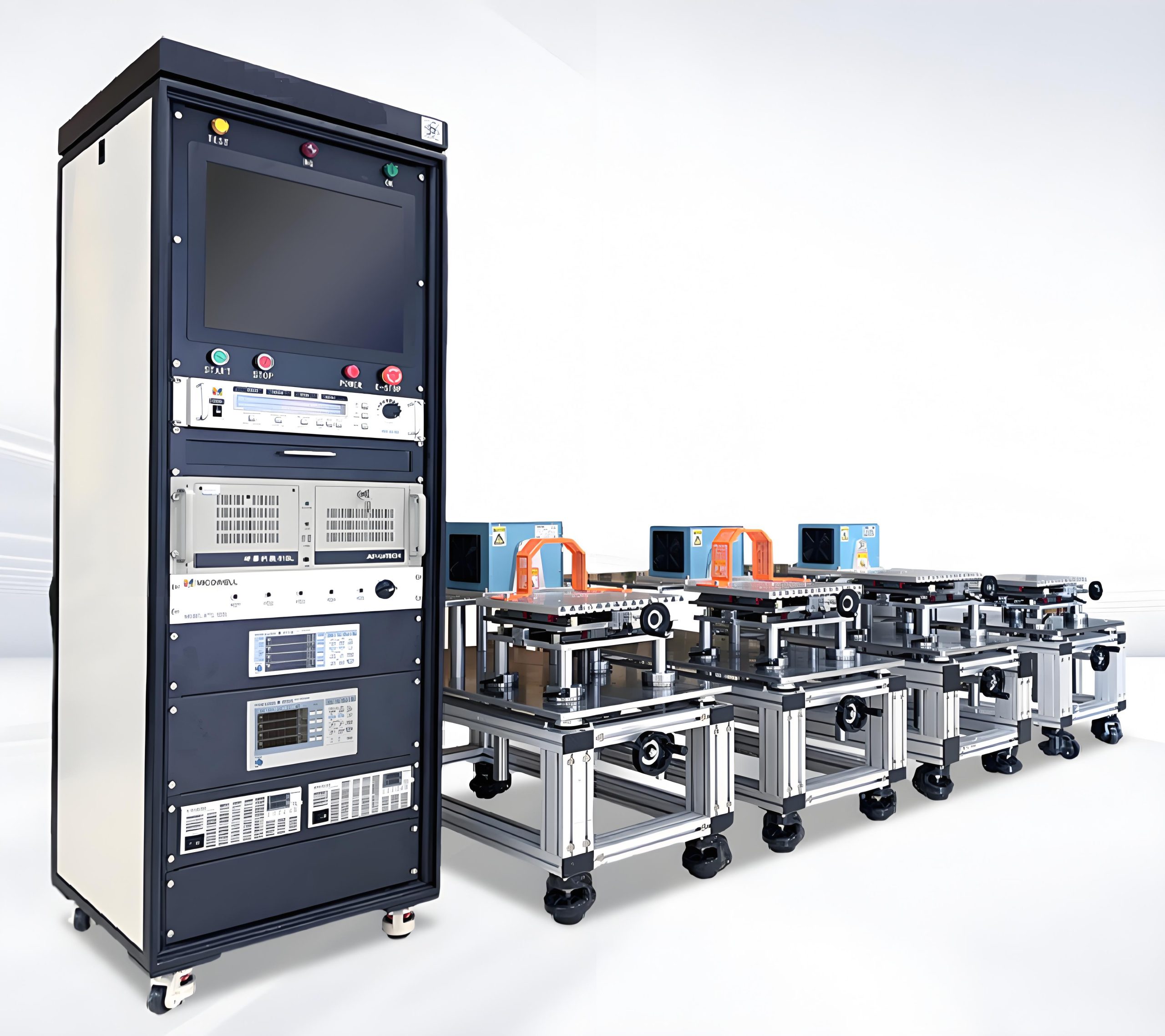
* Dynamometers: Precisely loading engines, motors, gearboxes, and transmissions to measure torque, power, and efficiency under controlled conditions. The linear control and wide speed range are crucial.
* Material Testing Machines: Applying controlled tension, compression, or torsion forces to test the strength and properties of metals, plastics, composites, and textiles.
* Component Endurance Testing: Simulating real-world loads on bearings, couplings, and other rotating components for reliability validation. The ability to provide constant torque regardless of speed or minor speed variations is vital for accurate, repeatable test results.
* **Motion Control \u0026 Positioning: Holding Steady, Moving Smoothly 🤖**
Integrating seamlessly into servo systems and robotics:
* Servo Motor Loading: Providing controlled, programmable dynamic loads for tuning and testing servo drive systems.
* Holding Brakes: Used as failsafe holding brakes on vertical axes (like Z-axes on CNC machines or robotic arms 🦾) or to prevent back-driving on lead screws. When power is removed, a spring engages the hysteresis brake (or permanent magnets provide residual hold), safely locking the shaft. Power restoration releases it silently and instantly.
* Torque Limiters: Protecting delicate mechanisms by slipping at a precisely set torque threshold.
* Force Feedback Systems: Providing realistic resistance in simulators, haptic interfaces for surgeons, or robotic arms interacting with their environment. The smoothness and controllability are key.
* **Medical \u0026 Life Sciences: Gentle Precision Saves Lives 🏥**
Where reliability, cleanliness, and quiet operation are non-negotiable:
* Centrifuges (Clinical, Laboratory): Providing smooth deceleration without jarring samples. Essential for delicate separations. 🧫
* Analytical Instruments (Chromatography, Spectroscopy): Ensuring precise movement of optics or sample handling mechanisms.
* Surgical Robots \u0026 Assistive Devices: Delivering controlled force feedback and precise positioning during minimally invasive procedures. Silence reduces surgeon fatigue.
* Medical Imaging Equipment (CT, MRI - peripheral systems): Controlling components where non-magnetic interference and quiet operation are essential near sensitive scanners. 🧠
* Infusion Pumps \u0026 Drug Delivery Systems: Ensuring precise control of fluid flow mechanisms.
* **Aerospace \u0026 Defense: Dependability in Extreme Conditions ✈️**
Rugged reliability and precise control where failure is not an option:
* Actuator Testing: Simulating aerodynamic loads on flight control surfaces during development and qualification.
* Gyroscope \u0026 Inertial System Testing: Applying controlled torques for calibration and performance verification.
* Radar \u0026 Antenna Positioning Systems: Providing smooth rotation control and holding for tracking systems. 🛰️
* Simulator Load Systems: Generating realistic control forces for pilot training.
* **Entertainment \u0026 Staging: The Show Must Go On Smoothly 🎭**
Behind the scenes for seamless performances:
* Stage Automation: Controlling the smooth, quiet, and precise movement of curtains, scenery, lifts, and rigging. No distracting noises during performances. 🎪
* Camera Dollies \u0026 Cranes: Providing controlled resistance and braking for smooth camera movements in film and television production. 🎥
* Turntables \u0026 Rotating Platforms: Ensuring stable, controlled rotation for displays or performance elements.
* **Energy \u0026 Industrial: Powerhouse Performance ⚡**
Handling demanding tasks in tough environments:
* Cable/Wire Payoff \u0026 Take-up: Precise tension control during laying or retrieval of heavy cables.
* Load Banks: Dynamically loading generators and power systems for testing.
* Fan/Blower Testing: Applying controlled loads to HVAC and industrial fan systems.
* Small Wind Turbine Control: Used in some designs for overspeed protection or pitch control actuation.
**Choosing the Right Hysteresis Brake: It's Not One-Size-Fits-All**
With such a wide range of applications, selecting the optimal hysteresis brake requires careful consideration. Key factors include:
* **Required Torque Range:** What is the minimum and maximum torque the application demands? Ensure the brake covers the range with margin.
* **Speed Range:** What are the minimum and maximum operating speeds? Remember, hysteresis brakes work well at high speeds but torque *at very low speeds* is where their smoothness truly shines.
* **Duty Cycle:** Will it operate continuously? Intermittently? In short bursts? Heat dissipation capability is crucial for continuous high-torque applications.
* **Cooling Method:** Can convection cooling suffice? Is forced air (integrated fan) needed? For extreme demands, is liquid cooling necessary?
* **Mounting \u0026 Interface:** Shaft size, mounting flange type, electrical connector type? Integration ease matters.
* **Control Signal:** What input signal will control the torque (e.g., 0-10V DC, 4-20mA)? Does it need a dedicated controller?
* **Environmental Conditions:** Temperature extremes? Humidity? Exposure to dust, chemicals, or washdowns? Specific IP ratings may be required.
* **Special Features:** Is a holding brake function needed? Low inertia rotor? Specific material compatibility?
Consulting with an expert application engineer from a reputable hysteresis brake manufacturer is highly recommended to navigate these choices and ensure optimal performance and longevity.
**Beyond the Basics: Advanced Capabilities**
Modern hysteresis brakes continue to evolve, incorporating sophisticated features:
* **Integrated Controllers:** \"Smart brakes\" combine the brake unit with an onboard controller that accepts commands (e.g., torque setpoint, ramp rates) via digital interfaces (CANopen, EtherCAT, Modbus, etc.) simplifying integration into complex automation systems.
* **Enhanced Cooling Designs:** Optimized fin geometries, high-efficiency fans, and integrated liquid cooling channels push thermal limits for sustained high-power applications.
* **Special Materials:** Advanced magnetic alloys and thermal management materials improve performance and efficiency.
* **Compact \u0026 Lightweight Designs:** Meeting the demands of robotics and portable equipment.
* **High Torque Density:** Packing more braking power into smaller packages.
**The Future is Smooth, Silent, and Controlled 🔮**
As industries push the boundaries of precision, automation, and efficiency, the demand for advanced motion control solutions like hysteresis brakes will only intensify. The relentless drive for quieter machinery, cleaner processes, reduced maintenance, and more reliable operation plays directly to the inherent strengths of this technology.
Imagine factories humming with productive activity, free from the constant clatter of mechanical brakes. Picture medical devices operating with near-silent precision, enhancing patient care and clinician focus. Envision complex tests delivering ultra-reliable data thanks to perfectly controlled loading. See stages transforming magically with scenery gliding silently into place. This is the world enabled by hysteresis brakes – a world where motion is tamed not through brute force and friction, but through the elegant, invisible power of magnetism.
**Embracing the Silent Revolution**
The next time you experience a perfectly smooth descent, witness flawless material processing, or rely on precision medical equipment, consider the unseen force behind it. Hysteresis brakes represent a fundamental shift in how we control motion – moving away from the limitations of mechanical contact towards a realm of magnetic mastery. They offer a compelling combination of performance, reliability, and longevity that translates directly into tangible benefits: reduced operating costs, improved product quality, enhanced equipment uptime, quieter workplaces, and cleaner processes.
For engineers, designers, and maintenance professionals grappling with the challenges of controlling motion in demanding applications, hysteresis brakes are not just an alternative; they are often the superior solution. It's not about replacing old technology; it's about embracing a smarter, more elegant, and ultimately more effective way to achieve mastery over movement. The era of noisy, high-maintenance friction braking is fading. The future, powered by the silent, enduring force of hysteresis, is here. Are you ready to harness it? ⚙️✨